
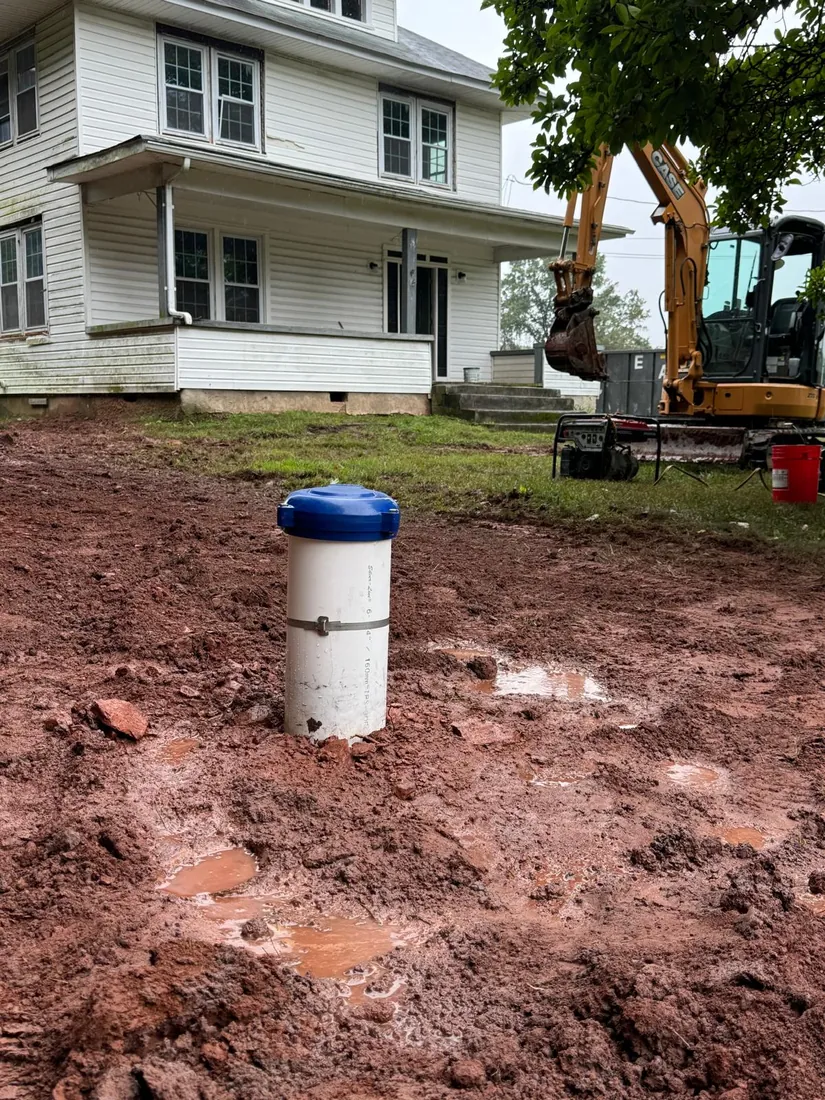
How Much Does It Cost to Cap and Seal an Old Well in Maryland?
Published guides put the cost to cap a well for good at a few hundred dollars to $5,000 or more. A cap belongs on a working well, so closing an unused one means sealing it. Depth moves the price most. In Maryland, sealing an old well is a licensed well driller’s job or is supervised by the approving authority.
Pricing a cap for an old well the house no longer uses? The job you need is a seal. A cap fits a well that still serves the house. Closing an unused well for good means filling and sealing it. Maryland treats that as licensed work, with a report filed after the job.
The ranges below come from two national well-owner guides. They are market data. We are based in Poolesville and Dickerson and seal old wells in Montgomery, Frederick, Carroll, Howard, Washington and Baltimore County. Your own number comes from a free estimate, written after a look at the well.
Is capping an old well the same as sealing it?
No. A cap is built for a well that is still in active service. It keeps insects and surface water out of the top of the casing. An old well you no longer use needs a seal. One well-owner guide puts it plainly: bolting a cap on an unused well and leaving it is not decommissioning.
Maryland’s well rules settle the question. COMAR 26.04.04 defines abandonment as discontinuing the use of a well permanently. Under COMAR 26.04.04.34, a well permanently disconnected from any water supply system counts as abandoned. An abandoned well shall be filled and sealed. All wells built before April 1, 1969 that are not in use shall be abandoned. The approving authority may also require sealing a well that is no longer needed or produces polluted water. A cap on top does not count as sealing.
What does it cost to seal a well in Maryland?
One well-owner guide says a shallow, small-diameter well can be sealed for a few hundred dollars. A published 2026 cost table puts a standard drilled well, 50 to 150 feet deep, at $1,000 to $3,000. A deep well over 150 feet runs $2,500 to $5,000 or more.
The 2026 table says its prices reflect 2026 quotes for residential rural properties. It adds that urban areas and high-cost states will be higher. The other guide calls its figures a starting point for a conversation. The real number depends on the well itself, which is why the estimate comes after a look at it.
Published ranges to seal an unused well, by well type
| Well type | Published range | Which guide |
|---|---|---|
| Shallow, small-diameter well | A few hundred dollars | Well-owner guide |
| Shallow well, under 30 feet | $500 to $1,500 | 2026 cost table |
| Standard drilled well, 50 to 150 feet | $1,000 to $3,000 | 2026 cost table |
| Deep or larger-diameter well | Roughly $1,000 to $3,000 or more | Well-owner guide |
| Deep drilled well, over 150 feet | $2,500 to $5,000 or more | 2026 cost table |
| Large-diameter dug well, or stuck equipment | Several thousand dollars and up | Well-owner guide |
What drives the cost to abandon a well?
Depth moves the price most. The 2026 cost table says cost is driven almost entirely by well depth. One well-owner guide adds diameter, casing material and how much sealing material the job takes. What is still down the hole matters too, and so does room for the rig.
COMAR 26.04.04.36 starts each job with an investigation of the well’s condition and construction. It also looks for obstructions that would interfere with filling and sealing. Those come out first, if possible by cleaning the hole or redrilling. Liners are removed unless the approving authority approves another plan. Statewide, the annular space of a cased well is sealed. That is the gap between the borehole and the casing.
Each step adds time. One well-owner guide puts a large dug well or stuck equipment at several thousand dollars and up. It credits a shallow well’s lower price to less depth and material and simpler access. Deep wells take more grout or bentonite and contractor time. Ask these questions when you compare quotes:
- Is pulling the old pump and pipe in the price?
- Does the quote cover clearing obstructions or redrilling?
- Will a liner come out, or is another plan needed?
- Is there room for the rig to reach the wellhead?
- Who files the Water Well Abandonment Sealing Report?
Can you cap an old well on your own in Maryland?
No. In Maryland, only a well driller licensed by the Maryland State Board of Well Drillers may seal an abandoned well. The other route is work under the supervision of a representative of the approving authority. The person who seals the well files a Water Well Abandonment Sealing Report within 45 days.
Searching how to cap a well for an old one? In Maryland, that is a licensed driller’s job. One well-owner guide warns that loose fill leaves air pockets that settle and collapse years later. Under COMAR 26.04.04.36, if bentonite chips bridge in the hole, the well shall be drilled out. The finished seal must not present a hazard to the safety and well-being of humans or animals.
COMAR defines the approving authority as the Secretary of the Environment or the Secretary’s designee. In Montgomery County, well and septic permits go through the Department of Permitting Services. In Frederick County, the health department approves new well construction. HydroWells is licensed through the Maryland State Board of Well Drillers. We file the sealing report as part of every well abandonment and sealing job.
When does an old well need sealing?
Sealing comes up when something changes on the property. A replacement well or a move to public water leaves the old well unused. A home sale can turn up a well nobody mentioned. In Maryland, a well permanently disconnected from the water supply counts as abandoned.
A new well and a sealing job pair up. Once a replacement well is in service, the old well should be decommissioned, one well-owner guide says. We seal the old well after drilling a replacement well. Our well drilling cost guide prices the new one. If the old well still makes some water, hydrofracking a low-yield well may be worth pricing first.
Public water raises the same question. In Montgomery County, a new or replacement on-site well in a planned public service area may get an interim permit. That permit requires abandoning it and connecting to public service within a year of service becoming available. A home sale can turn up an old well too. A well inspection before closing checks the well that serves the house. Our well inspection cost guide lists what that costs.
An old hand-dug well by a farmhouse needs extra care. The Frederick County Health Department’s well handbook says dug wells are frequently contaminated by bacteria and nitrate. They are also large enough for humans and animals to fall in. Maryland’s rules give a dug well its own sealing procedure. Keep people and animals clear of it until it is sealed.
Have an old well on the property, or a cap that needs a look? Call (301) 393-7090. We take calls 24/7, nights, weekends and holidays included. Estimates are free and written after a look at the property. You can also send us the address and what you found.