Water Treatment
Softeners, UV disinfection, iron and sediment filters, acid neutralizers — treatment systems designed off your actual water, installed and serviced.
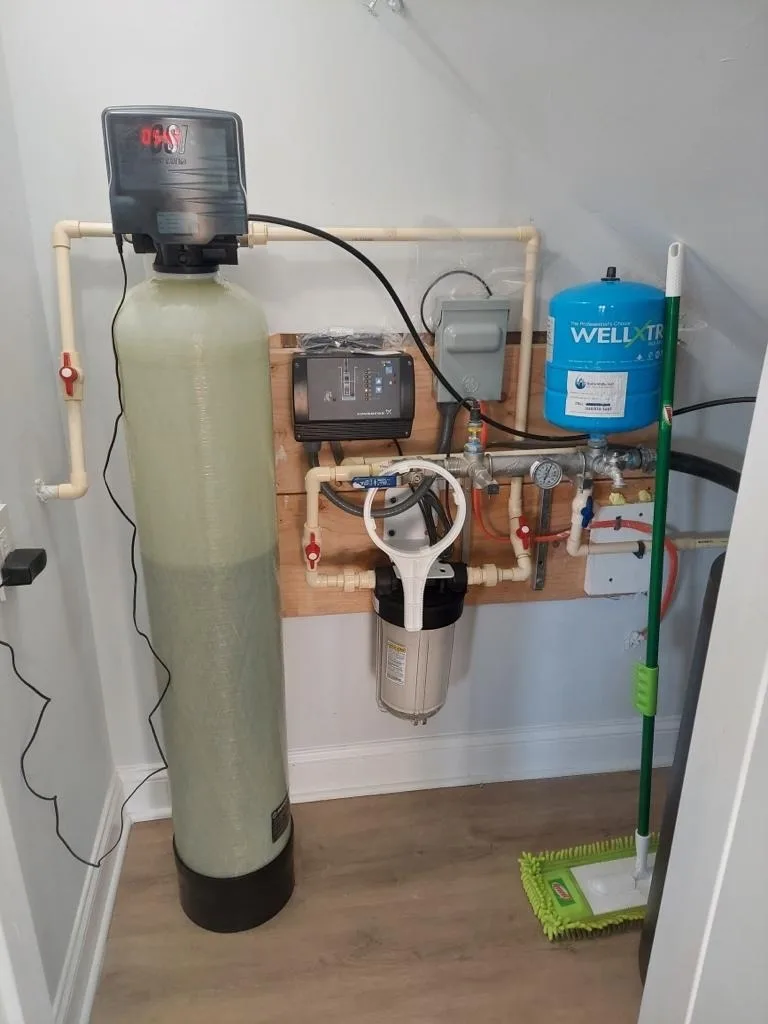
Water softener installation is one of the most common jobs we run for well owners in Central Maryland. Hard water is normal here. Groundwater picks up calcium and magnesium as it moves through rock, and several of our counties sit on limestone. You see it as scale on faucets, spots on clean glasses, stiff laundry, and a gray film in the tub. Soap stops lathering the way it should. A softener trades those hardness minerals out of the water before it reaches your fixtures. We size the unit to your test numbers and your household, then we service what we install. We take calls 24/7 at (301) 393-7090.
Most people call us after they notice the symptoms, not after a test. The test still comes first. Hardness gets reported in grains per gallon or in milligrams per liter. One grain equals about 17 milligrams per liter. That number sets the size of the softener and how often it regenerates. Iron changes the plan too, because oxidized iron coats the resin and shortens its life. So we start with a certified lab water test and read the hardness and iron together. Then we put a system on paper that matches what your water actually holds.
Tell us about your project — we’ll get right back to you.
The USGS sorts water into four classes by hardness. Soft runs up to 60 milligrams per liter. Moderately hard runs 61 to 120. Hard runs 121 to 180, and anything above 180 is very hard. In grains per gallon those lines fall at about 3.5, 7 and 10.5. Water under about 7 grains rarely causes much scale or soap film. Above that, the buildup starts to show. Scale settles inside the water heater, where it cuts efficiency and shortens the life of the tank.
Where you sit on the map matters. The Frederick Valley and the Hagerstown Valley are limestone and dolomite country. The Maryland Geological Survey studied the carbonate rocks under both valleys. It reported the water is almost always hard or very hard. That covers a lot of Frederick County and Washington County. East of there, the Piedmont is mostly crystalline rock. The Survey describes Piedmont groundwater as slightly acidic with low dissolved solids, so hardness there swings well to well. Two wells a mile apart can test very differently. We read your numbers, not a county average.
A softener is a tank of resin beads loaded with sodium. Hard water runs through the bed. The calcium and magnesium stick to the resin, and sodium goes into the water. The resin fills up after a set number of grains. Then the unit regenerates. It draws salt brine from the brine tank and rinses the hardness off the resin. That rinse water goes to a drain. A timer model regenerates on a schedule. A metered model counts gallons and regenerates on demand, which uses less salt and less water. We match grain capacity to your hardness and your daily use.
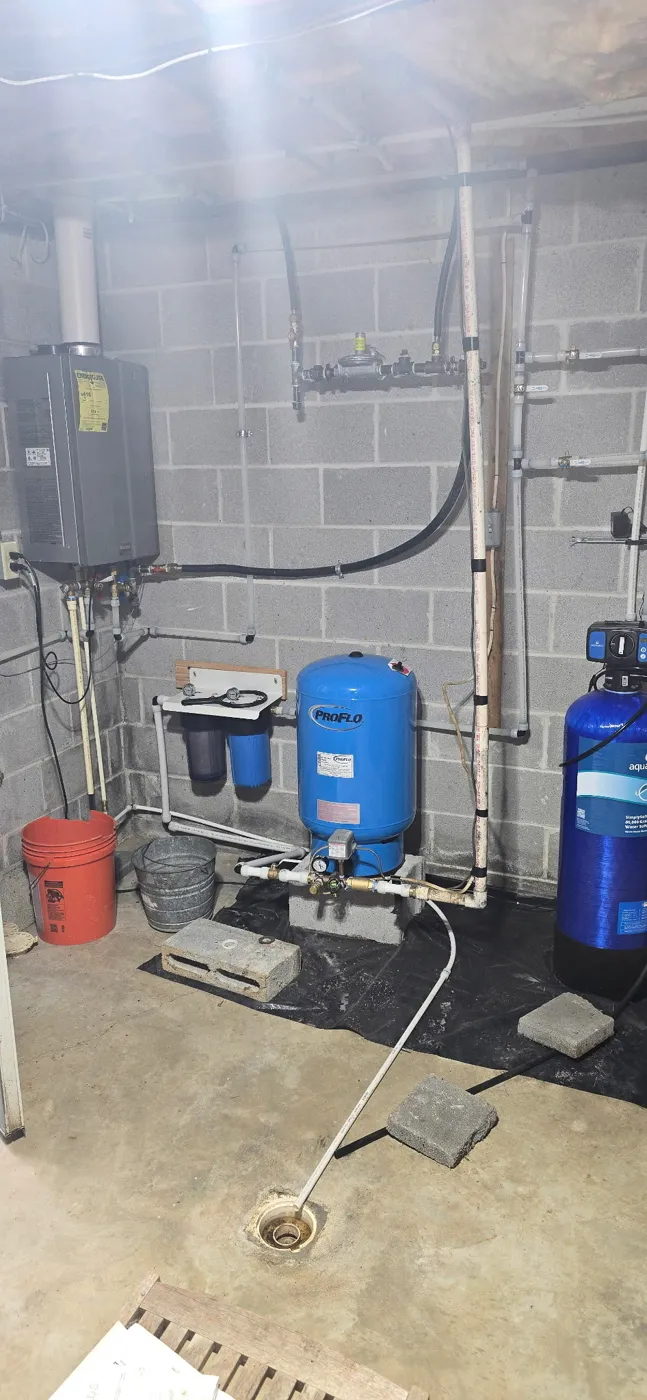
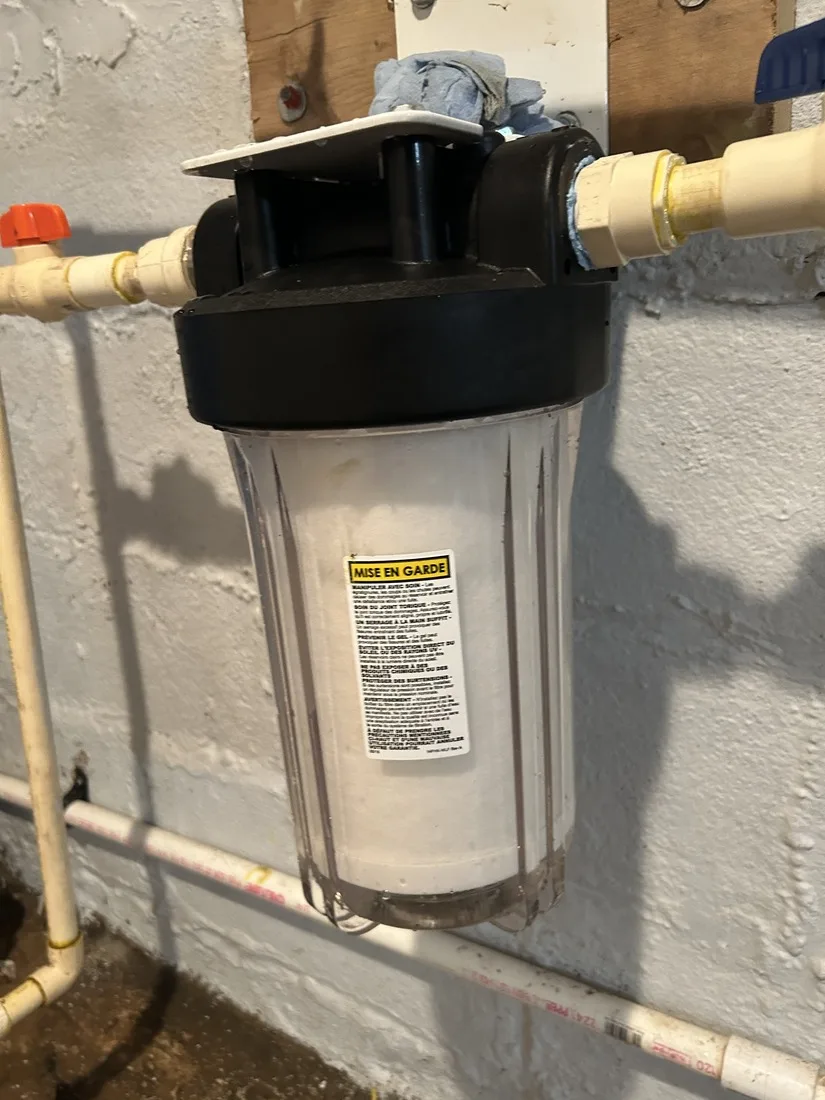
On install day the softener goes in on the main line, after the pressure tank. We set a bypass valve so the house can still run with the softener out of service. The drain line gets plumbed with an air gap to carry the rinse water away. Then we load the brine tank with salt and program the valve to your numbers. Order matters in a treatment train. Sediment and iron and manganese removal go ahead of the softener, because grit and oxidized iron foul the resin. UV disinfection goes last, once the water runs clear.
We also work on softeners that are already in the house. When a unit stops softening, the cause is usually one of a handful of things. Resin wears out over the years and stops holding capacity. Salt can bridge into a hard crust in the brine tank, so the unit rinses with no brine underneath. Control valves stick and seals fail. The small injector that pulls brine can clog. Sometimes the programming is simply wrong for the water. We test the water and run the valve through a cycle. Then we tell you whether a repair or a replacement makes more sense.
Salt-free conditioners come up often, and the two units do different jobs. A softener removes calcium and magnesium from the water. A salt-free conditioner does not remove them. It changes the minerals so they are less likely to stick to pipes and heating elements as scale. The Water Quality Association draws the same line and keeps the word softening for removal. A conditioner can cut scale, but your water still tests hard. Soap still will not lather the way it does on softened water. Conditioners use no salt and need no drain line, which suits some houses.
Free, no-obligation estimates across central & western Maryland.
(301) 393-7090From the first look at the property to water proven at your tap, here is exactly how it goes.
We come see the actual situation — the well, the equipment, the water, the ground. What's failing, why, and what the fix really is. No blind quotes over the phone.
You get a free written estimate with a real number and a real plan. It says what's included — drilling, equipment, connection, permits — and it holds unless the scope changes.
The crew shows up with the right equipment and does the job the way we quoted it — drill, frack, pull the pump, set the tank, build the treatment. Anything unexpected, you hear about it immediately, not on the invoice.
We don't call it done until the water proves it: yield checked, pressure steady, system cycled, and testing when the job calls for it. Done means water at your tap — and you saying it's done.
Common questions about water softeners across central & western Maryland. Don't see yours? Give us a call — we're happy to help.
Softeners, UV disinfection, iron and sediment filters, acid neutralizers — treatment systems designed off your actual water, installed and serviced.
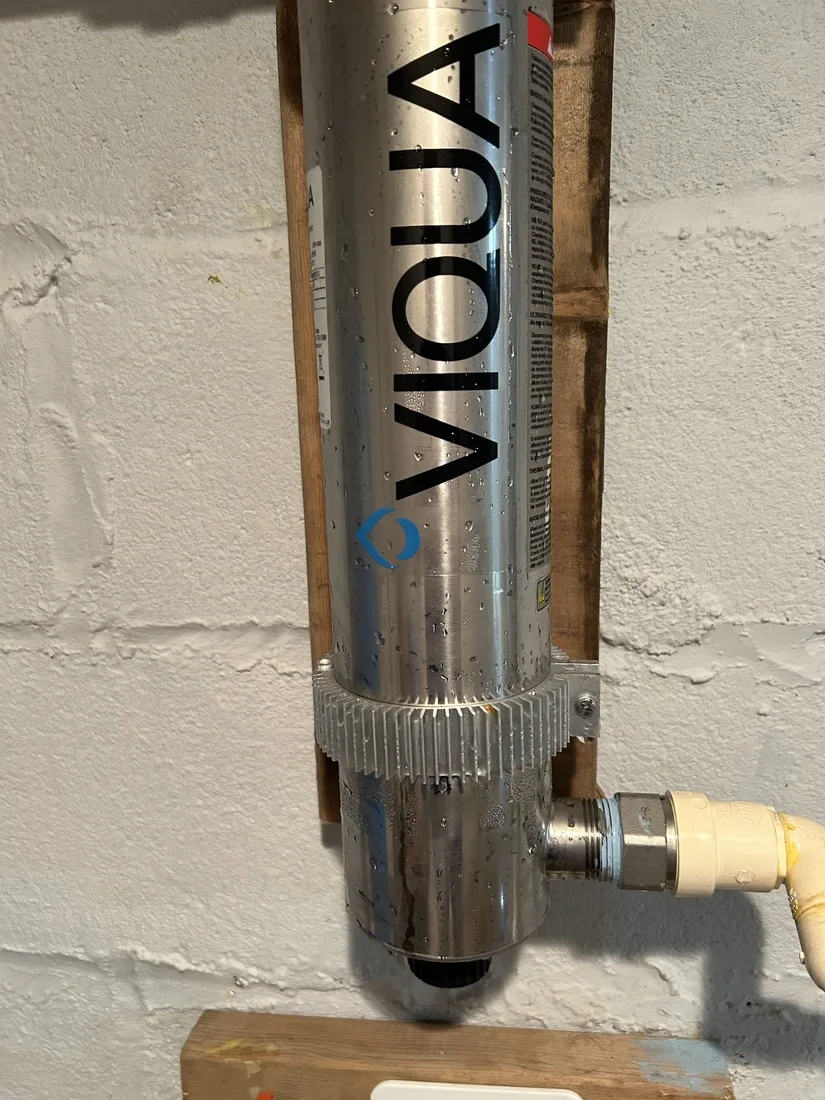
Proper sampling and certified lab testing — for closings, FHA/VA and county requirements, or just knowing what your family is drinking.
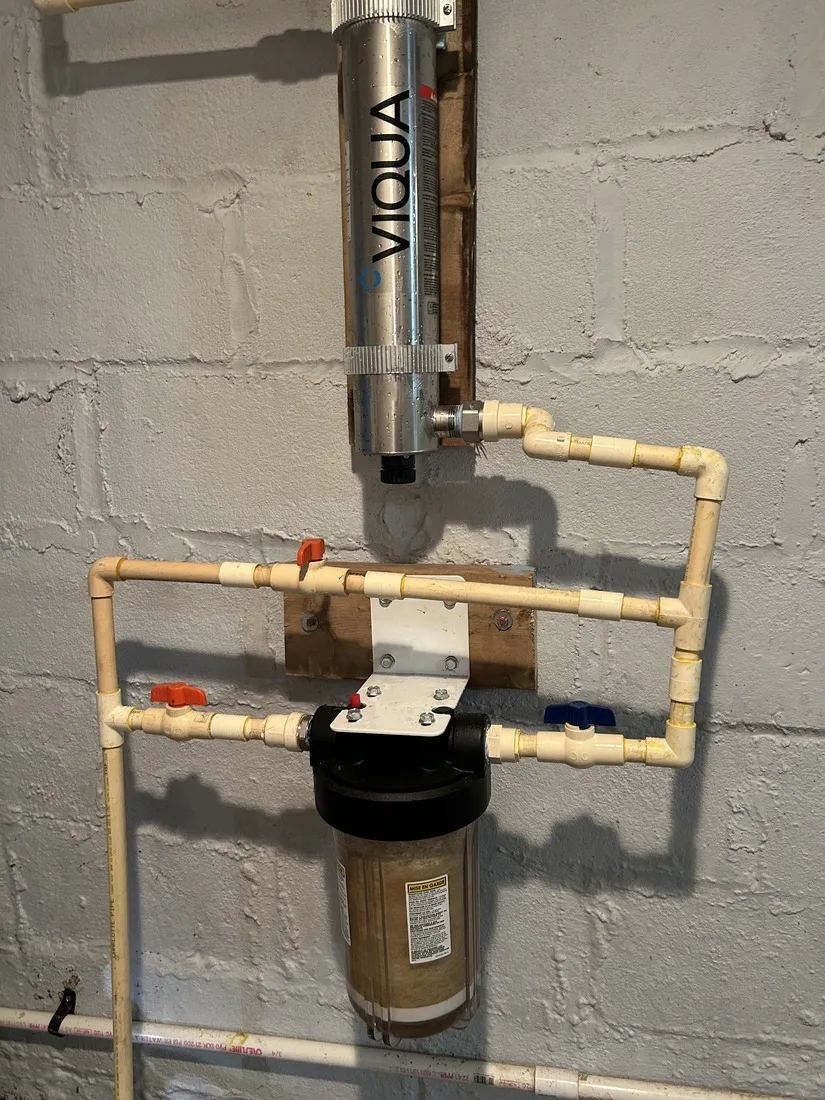
Shock chlorination and UV disinfection for Maryland wells that test positive for total coliform or E. coli. Retest comes after the chlorine clears.
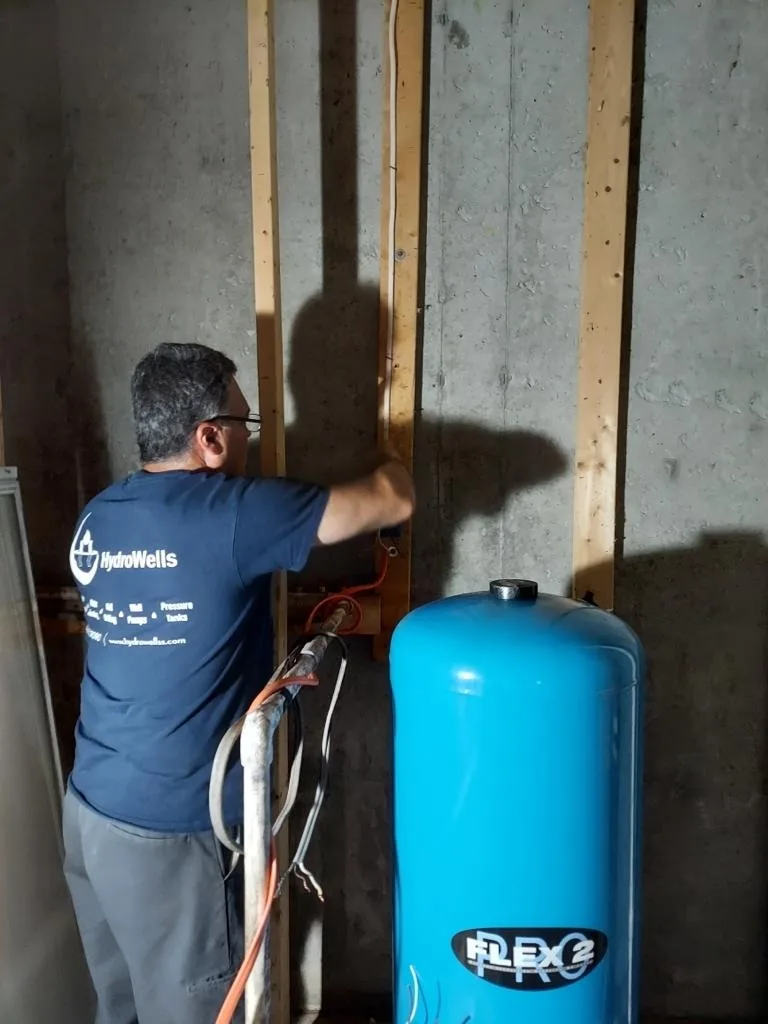
Pressure tanks, switches and constant-pressure systems — installed, repaired and sized right, so the shower stops surging and the pump stops suffering.
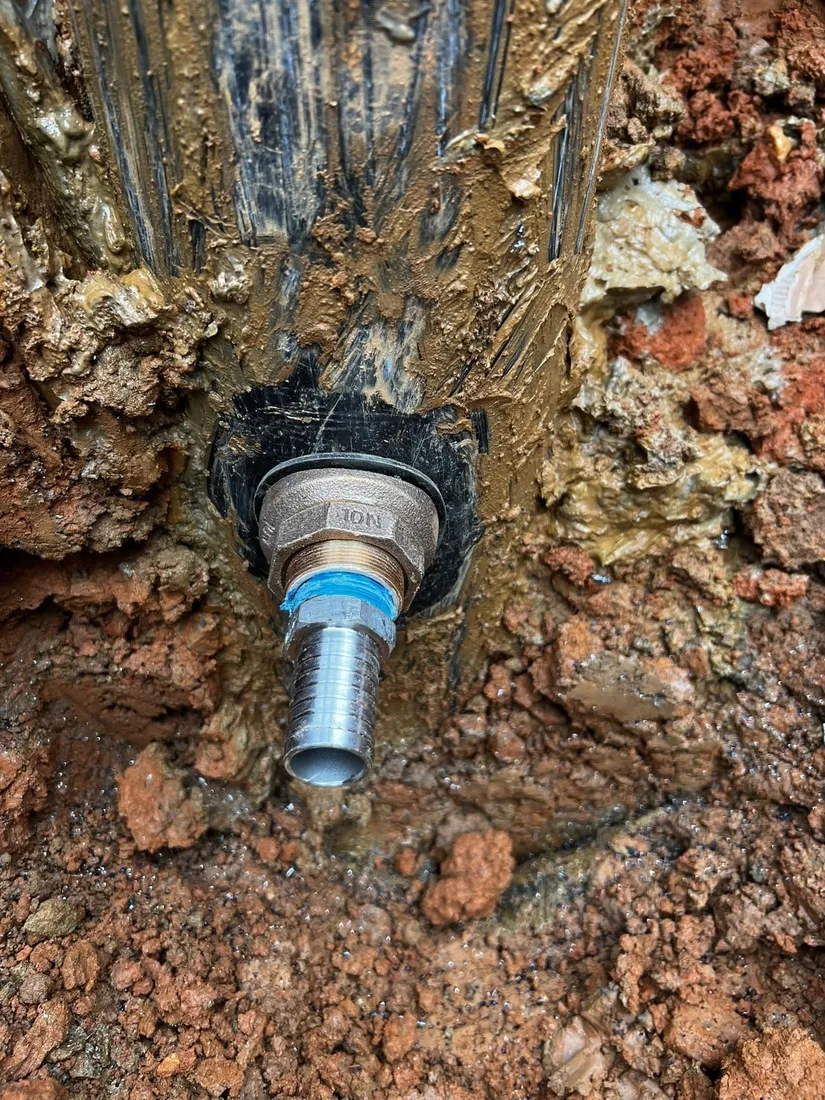
Complete well system checks — yield, pump performance, tank, wellhead condition and water quality — documented for home sales or your own peace of mind.
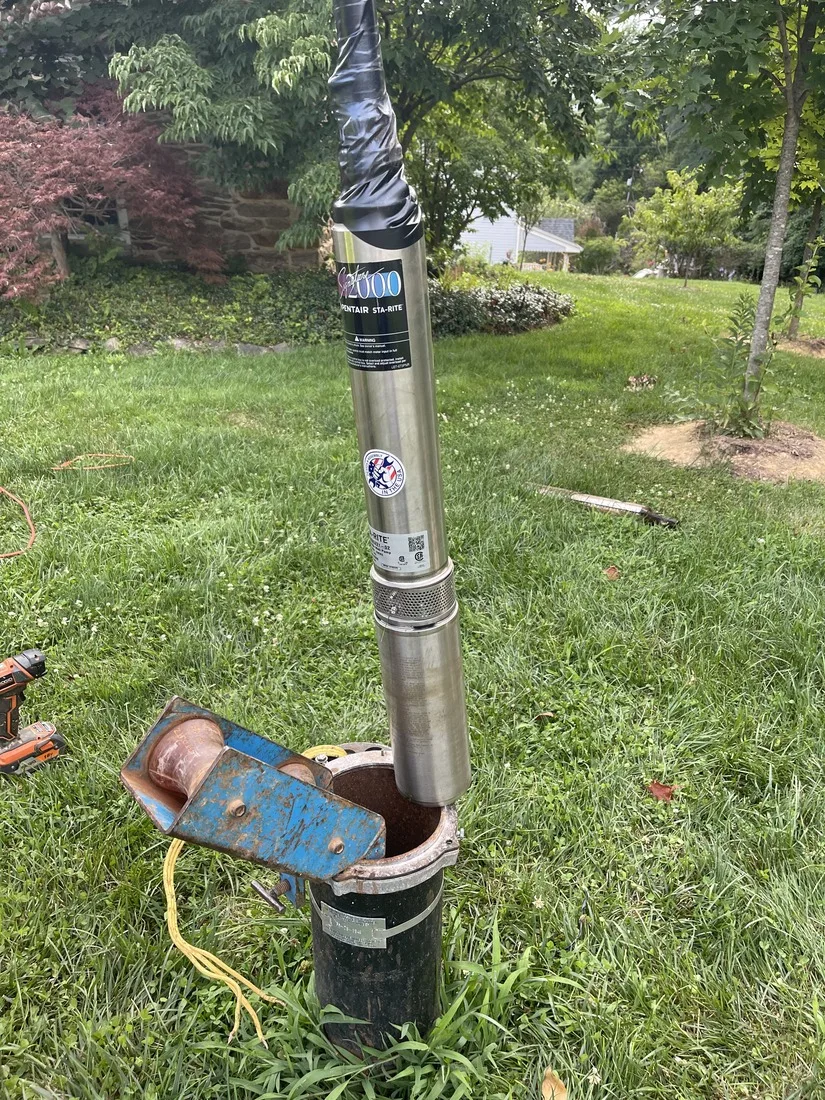
Submersible and jet pumps diagnosed, repaired and replaced — no-water calls, weak pressure, short cycling. Available 24/7.
Drilling, hydrofracking, pumps, pressure tanks, testing, treatment — the rigs and the service trucks belong to the same outfit, so one call covers the whole system.
A house without water is an emergency, and we run the operation that way. Call day or night — phone triage is free, and if it needs a truck, a truck moves.
We look at the actual property, price it in writing, and tell you what is worth doing and what is not — including when hydrofracking beats drilling new. No phone guesses.
Based in Poolesville and Dickerson, working six counties. We know what this region’s fractured rock and limestone valleys do to wells — and we drill and service for it.
No water, weak pressure, a well to drill, water that needs testing or treatment? Call or send the form and we will look at the property with you and hand you a free written estimate — and for a house that is dry right now, we answer 24/7.
Tell us about your project — we’ll get right back to you.